You arrive on a construction site in Germany and expect chaos—cement dust swirling, mixers groaning, buckets everywhere. Instead you find a quiet team placing what look like flat panels on brick courses, spraying them with water and watching them transform into perfect mortar. No mixer. No sand piles. No buckets of slurry. It looks like something you’d expect from sci-fi builders rather than a building contractor. Yet here it is, real, and it is rewriting masonry.
The Panel That Does the Mixing for You
Meet the product: the maxit mörtelpad. It replaces the traditional mortar process. The pad arrives factory-prefabricated, with exactly the right binder mix. A worker places it, applies water, and the pad activates into a ready-to-use thin-bed mortar.
Gone are the steps of measuring sand, adding cement, adjusting water. What remains is precision, speed and minimal waste. On a site accustomed to hand-mixing and guesswork the change is uncanny.
Who Wins When Mortar Becomes Modular
Everyone on the project chain benefits. Bricklayers spend less time mixing, more time laying. They handle fewer tools, produce less dust and walk into a job feeling cleaner and faster. Contractors gain up to 24 % more output using the same personnel.
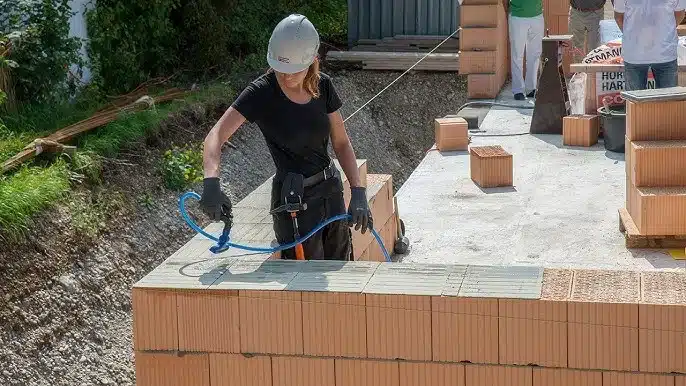
Architects see guaranteed continuity in joint quality thanks to the factory process. And sustainability enters the process: the pad produces 33 % less CO₂ in its manufacture compared to conventional thin-bed mortar. The humble mortar joint has gained performance credentials.
What It Feels Like on Site
Walk past a mixer clutching extractor, a worker shaking a bucket, and then step into a site using the pad. You feel the tempo change. No clanking of mixers.
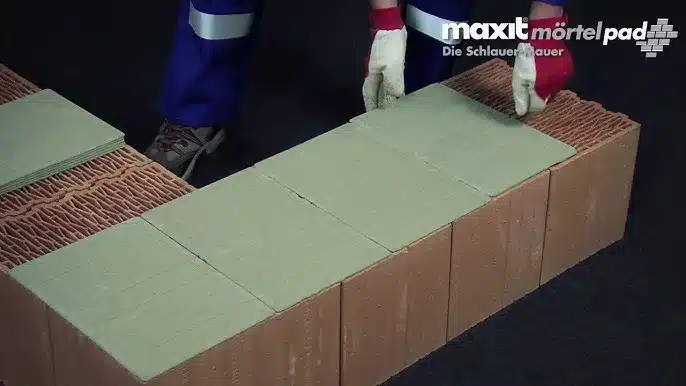
No cleaning of sledge and trowel. You watch a line of bricks laid at a rhythm that feels almost machine-like but humanly guided. Mortar mixing has vanished. Bricklaying alone remains. Experienced craftsmen marvel: “It’s like the mixer has retired and left us alone.”
Why This Might Be the Next Big Shift in Masonry
Brickwork has always relied on manual skill and heavy equipment. The pad changes the paradigm. Lightweight transport. Controlled morphology. Cleaner site. Fewer variables. The joint consistency becomes less dependent on the worker’s mix and more on the placement.
And in an industry where delays and weather affect the mix, taking the variable out gives site managers a predictability edge. The next time you walk past a German site and it looks calm, purposeful and almost too tidy, you might just be witnessing a construction evolution in slow motion.