It sounds like something out of a fantasy novel, a ghostly blossom that turns completely transparent in the rain, as if nature hit the “invisibility” switch. But this isn’t a trick of the light or an artist’s illusion. Meet Diphylleia grayi, the “skeleton flower”—a rare botanical marvel that sheds its opaque white petals when wet, revealing a see-through spectacle that looks like glass. Believe it or not, this flower truly disappears before your eyes.
A Ghost Among Blooms
Tucked away in the chilly, mist-shrouded mountains of Japan, China, and the eastern United States, the Diphylleia grayi is anything but your average backyard blossom. Known affectionately as the “skeleton flower” due to its haunting transformation, this plant thrives in moist, shady woodland environments, just the kind of mystical backdrop you’d expect for a floral shapeshifter.
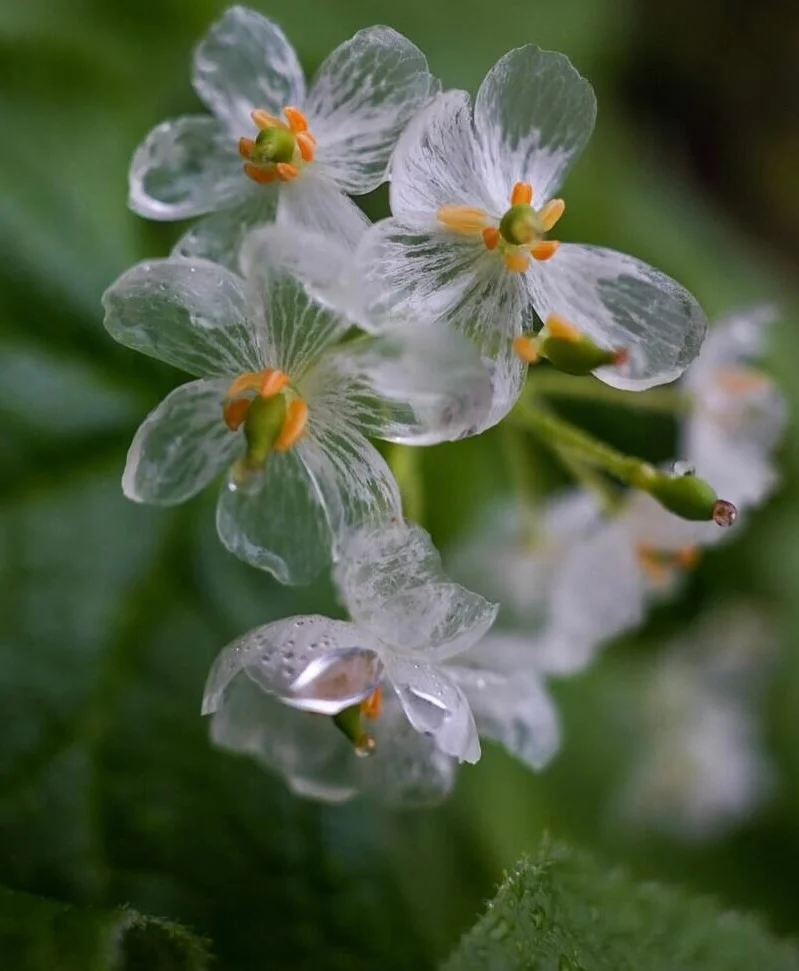
When dry, the petals appear pearly white and unassuming. But when rain or dew touches them, the cells within the petals absorb water and alter the way light passes through. This results in the petals turning almost completely clear, like little panes of glass fluttering in the forest breeze. Once the moisture evaporates, the petals slowly return to their original milky white, making this flower’s transformation an on-again, off-again affair that mirrors nature’s mood swings.
Why It Turns Transparent (And No, It’s Not Magic)
The transparency of Diphylleia grayi isn’t just a fluke of fairytale luck, it’s the result of clever biological engineering. Most petals scatter light because of the air-filled gaps in their cellular structure. But when the skeleton flower gets wet, water fills those gaps and the light passes through more directly, causing the petals to lose their colour and become see-through.
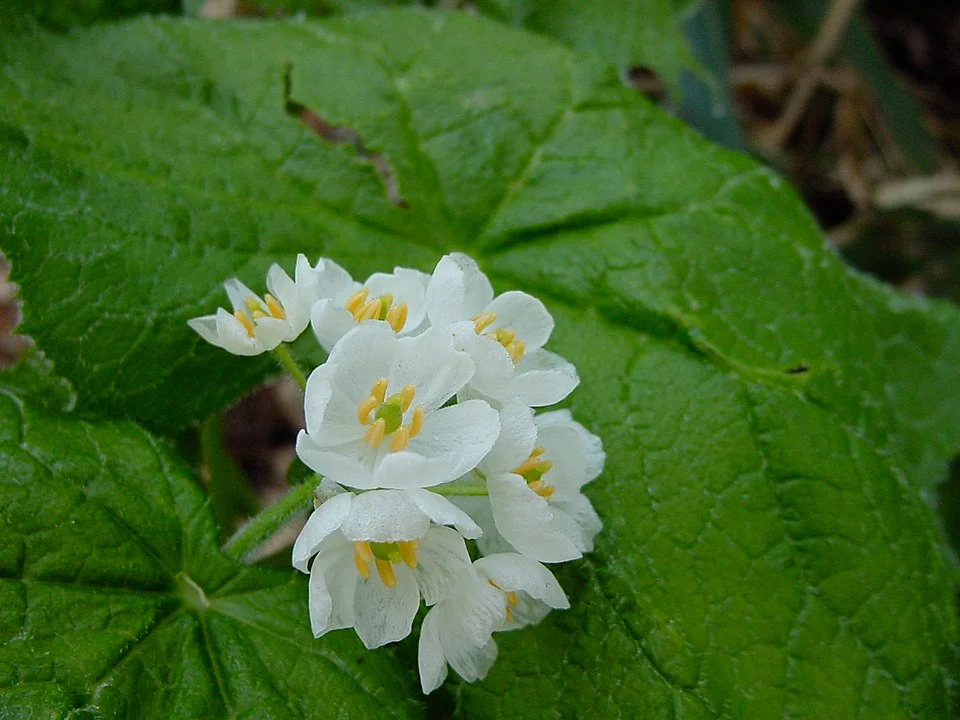
Think of it like a sheet of tissue paper versus one dipped in water, one’s opaque, the other’s see-through. But unlike that soggy paper, the skeleton flower holds its shape, remaining delicately translucent, with veins clearly visible like a floral X-ray. It’s a fleeting, ethereal effect that leaves onlookers questioning their own eyes.
A Short Bloom with a Long Impact
The Diphylleia grayi isn’t just rare, it’s elusive. It blooms briefly during the late spring to early summer, typically in May or June, making sightings of the flower in its transparent state even more special. Its transformation usually lasts only while wet, meaning those lucky enough to see it happen need to be in the right place at the right time… and probably a little damp.

Despite its ghostly fame, the skeleton flower isn’t widely cultivated due to its specific growing conditions. It demands high humidity, cool temperatures, and acidic, well-drained soil, essentially, a mountain hideaway. But for those determined green thumbs who manage to grow it in shaded garden corners, the payoff is a botanical magic trick you’ll never get tired of watching.
A Real-Life Botanical Illusion
In a world where CGI tricks the eye and AI generates the surreal, the skeleton flower is a reminder that Mother Nature still holds the copyright on “extraordinary.” It blurs the line between visible and invisible with nothing more than a few drops of rain. In Japan, where the flower is most famously found on Mount Daisen, it’s not just admired, it’s revered, sometimes seen as a metaphor for the fragile, fleeting beauty of life itself.
So next time you’re trudging through a rain-soaked forest, keep your eyes peeled. You might just stumble upon a ghost, not of the spooky kind, but one that grows from the ground, shimmers like crystal, and disappears when you blink.