Far beneath Norway’s west coast, engineers are carving a 27-kilometre road through solid bedrock, creating what will become the world’s longest and deepest undersea road tunnel when Rogfast opens in 2033.
Below the North Sea, A Road Begins
Cold seawater presses down with relentless force. Rock tightens. Drill heads cut forward in measured bursts. Far beneath Norway’s west coast, crews shape a road in near-total darkness, surrounded by pressure that never eases. At almost four hundred metres below sea level, headlights will one day pass through solid stone. This is not a metro. This is not a railway. This is a highway built under the sea, deeper and longer than any road tunnel before it.
The Record Hidden Beneath the Fjords
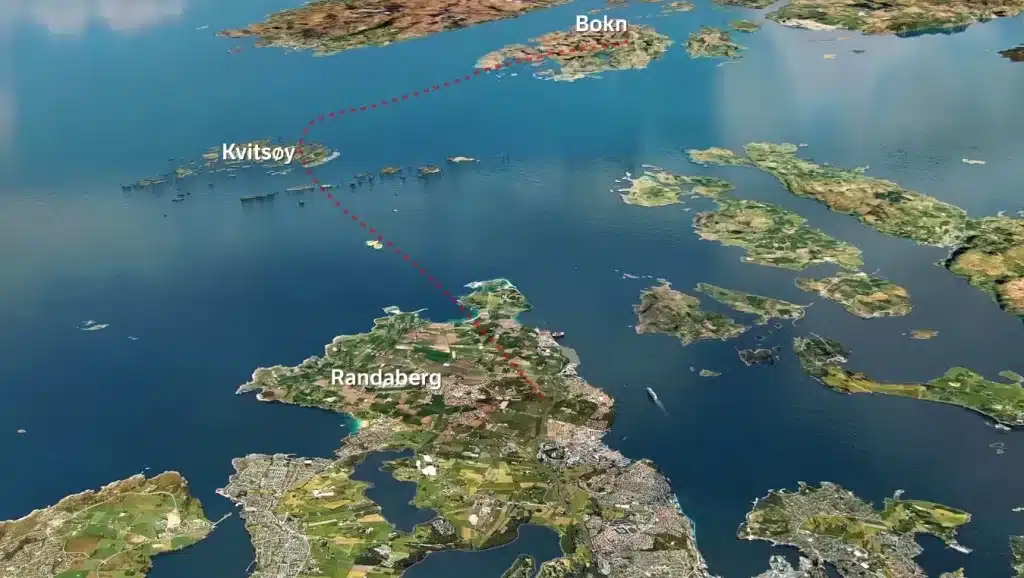
The project is called Rogfast, short for Rogaland fixed link. When it opens in 2033, the tunnel will extend 27 kilometres from Randaberg near Stavanger to Bokn. At its lowest point, it will sit 392 metres below sea level. No other road tunnel reaches further beneath the ocean. None runs longer under seawater.
Rogfast forms part of E39, the coastal highway that traces Norway’s western edge. For decades, ferries have bridged gaps carved by fjords and islands. Rogfast aims to remove one of the most time-consuming crossings, replacing waiting ramps and timetables with uninterrupted road.
A Coastline Shaped by Water
Western Norway’s geography defines how people move. Fjords cut deep into the land. Islands scatter routes across open water. Ferry crossings add delays to everyday travel. For drivers moving between Stavanger, Haugesund and Bergen, time often disappears at the shoreline.
Rogfast offers a different pattern. Once complete, it is expected to cut travel time between Stavanger and Bergen by around 40 minutes. The tunnel will support daily commuting, freight movement and long-distance travel across the region.
The project also includes a subsea spur to Kvitsøy, Norway’s smallest municipality. This connection links island life directly into the mainland road network, extending the tunnel’s reach beyond through-traffic.

Drilling With Millimetre Precision
Construction began on 4 January 2018. Work paused in late 2019 after projected costs increased and contracts were restructured. Crews returned in late 2021 under revised plans and budgets. Completion now targets summer 2033.
Rogfast relies on drilling and blasting through solid bedrock rather than prefabricated tunnel sections. This approach draws on Norway’s long experience with subsea road tunnels. Regulations require at least 50 metres of rock between the tunnel and the sea above, providing a buffer against pressure and seepage.
Construction advances from several points at once. Teams drilling from opposite ends must meet with a margin of error of no more than five centimetres. Laser scanners record millions of measurements each second, building a digital model that allows engineers to check alignment and prevent costly corrections.
A Roundabout Far Below the Surface
Roughly halfway through the tunnel, drivers will pass an unusual feature rarely seen at such depth. Two underground roundabouts sit 260 metres beneath sea level, linking the main tunnel to the Kvitsøy spur.
This layout allows traffic to continue flowing even during maintenance or incidents in one section. The tunnel itself consists of two separate tubes, each carrying two lanes of traffic. Cross passages, emergency walkways and monitoring systems run throughout.
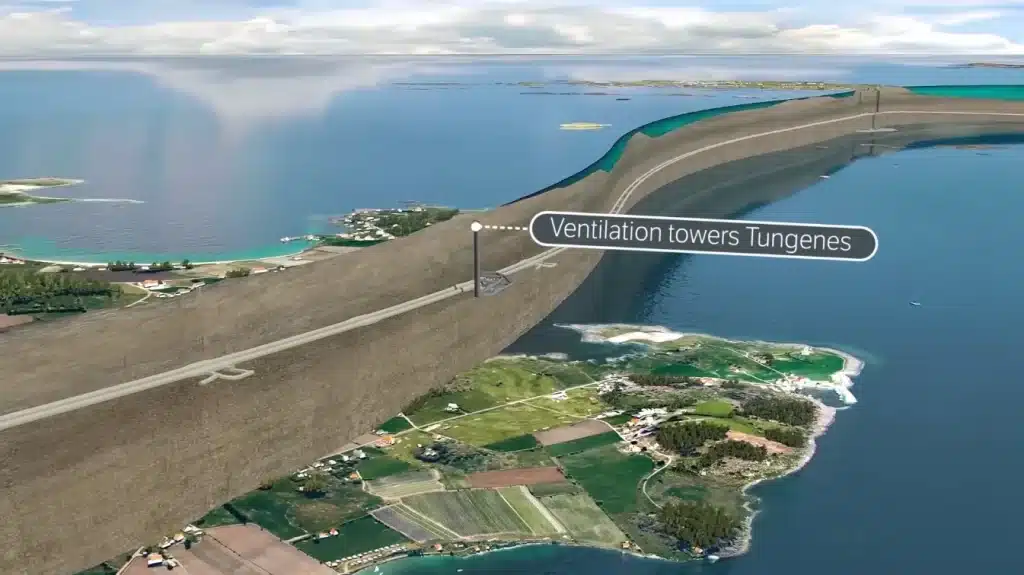
Cameras, radar and real-time incident alerts will monitor conditions. A longitudinal ventilation system powered by jet fans, supported by a vertical shaft to Kvitsøy, will manage air quality across the tunnel’s length.
Saltwater and Stone
Depth creates challenges no surface road encounters. Crews working beyond 300 metres below sea level have already faced saltwater leaks. Engineers continue refining grouting methods to seal fractures in the rock while maintaining safe working conditions.
These techniques draw on decades of subsea experience, now applied at a depth rarely attempted for road traffic. Progress continues across multiple sections, with major contracts signed between 2022 and 2024 and excavation advancing steadily from both ends.
Lives That Will Move Faster
When Rogfast opens, its effects will appear gradually. Freight vehicles will cross the region without ferry queues. Commuters will spend less time in transit. Seafood producers will ship goods with fewer delays and greater predictability.
Traffic projections indicate that up to 13,000 vehicles a day could use the tunnel by 2053. Beneath the sea, a constant flow of everyday movement will replace the churn of ferry wakes.
When the Machines Fall Silent
One day, the drills will stop. The scanners will shut down. Water will press against rock that no longer shifts. Far below the waves, engines will hum along a route once thought unreachable. Rogfast will stand as proof that even the deepest places can carry ordinary life.
Published 27-Dec-2025