A glass sat on a bar beneath a drifting cloud of white vapour. The cocktail looked like a piece of theatre. Cold fog curled above the rim while the liquid shimmered in the glass. A 34-year-old man in Mexico lifted the drink and swallowed it. Within seconds, severe pain tore through his abdomen. What began as a smoky spectacle suddenly turned into a medical emergency unfolding inside his body.
Doctors later discovered the cause. The drink had been prepared with liquid nitrogen, a substance famous for creating dramatic clouds of fog in modern cocktails. When the man consumed the drink before the nitrogen had fully evaporated, the cryogenic liquid warmed rapidly inside his stomach. As it changed into gas, it expanded violently. The expansion ruptured his stomach and filled his abdomen with trapped gas.
The Cocktail That Turned Dangerous
Liquid nitrogen has become a popular tool in food presentation. Chefs and bartenders sometimes add the substance to drinks or desserts because it produces thick white vapour as it evaporates. The effect creates the illusion that a drink is smoking.
In many cases, the technique remains safe because the nitrogen evaporates completely before the food or drink is served. Liquid nitrogen also has legitimate uses in the food industry. It rapidly freezes ingredients and helps preserve texture, moisture, and flavour.
Problems arise when the substance remains in food or drink at the moment it is consumed. Liquid nitrogen exists at extremely low temperatures of about minus 196 degrees Celsius. When it warms, it quickly transforms into gas. During this transition, the volume expands roughly 700 times.
If the liquid reaches the stomach before it has evaporated, the expanding gas can create dangerous internal pressure. Doctors have reported that this rapid expansion can rupture the stomach and release gas into the abdominal cavity.

Pain Within Seconds
The Mexican patient experienced symptoms almost immediately. Moments after drinking the cocktail, he felt intense abdominal pain. His condition worsened rapidly.
When he arrived at the emergency department, doctors observed several alarming signs. He was sweating heavily and appeared lethargic. His heart rate had risen to 124 beats per minute. His blood pressure was dangerously low. His body temperature had dropped to around 35.4 degrees Celsius, and he was breathing faster than normal.
Doctors examined his abdomen and noticed that the pain spread across the entire area rather than concentrating in one spot. When they tapped the abdomen during examination, the sound suggested large amounts of trapped gas.
Normally, only certain parts of the abdomen produce hollow sounds when tapped. In this case, the entire abdomen produced the same air-filled tone. The finding suggested a serious internal problem.
The Hidden Gas Inside The Abdomen
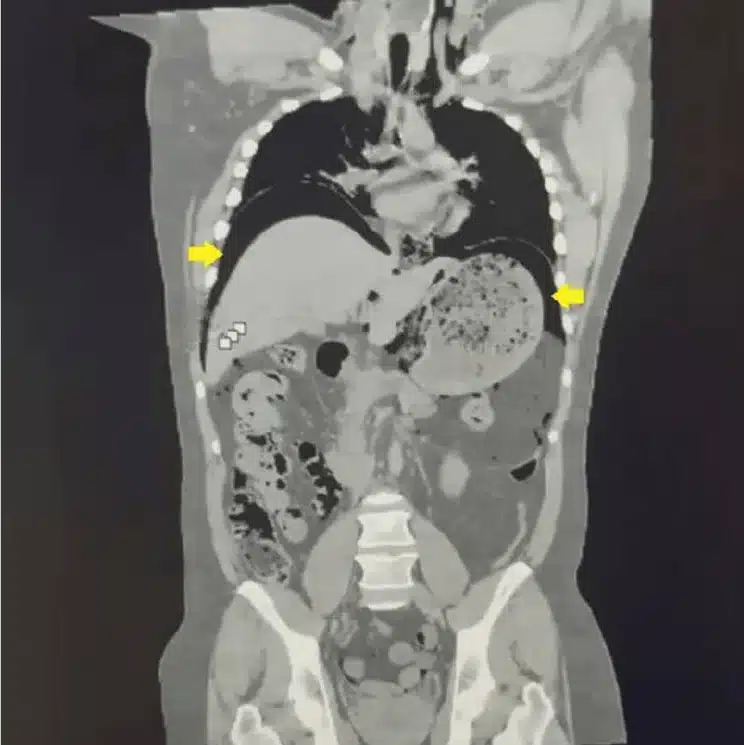
To confirm the diagnosis, doctors ordered a computed tomography scan. The imaging revealed a large amount of gas trapped inside the abdominal cavity. This condition, known as pneumoperitoneum, indicated that gas had escaped from the digestive system.
The scan also confirmed a rupture in the stomach wall. Surgeons later identified a perforation measuring roughly three centimetres. Doctors moved quickly to treat the injury.
Surgeons performed minimally invasive surgery using a small keyhole incision. The procedure allowed them to release the trapped gas from the abdomen. They then inserted a laparoscope, a thin tube fitted with a camera, to locate the damaged section of the stomach.
Using laparoscopic tools, the surgeons repaired the perforation and reinforced the area with tissue from the abdomen. The patient recovered well after the procedure. Within two days he was able to tolerate a liquid diet. Three days after the operation, doctors discharged him from the hospital.
The Science Behind The Injury
Medical researchers note that injuries caused by liquid nitrogen ingestion remain rare, but they require immediate treatment when they occur.
Two main dangers explain the risk. The first involves extreme cold. Liquid nitrogen can cause severe tissue damage because it freezes water within human cells. This freezing effect can lead to burns if the substance touches the skin or internal tissues.
The second danger comes from pressure. When liquid nitrogen warms inside the body, it rapidly converts to gas and expands dramatically. The sudden increase in volume can stretch organs and cause rupture.
Scientists also describe a phenomenon called the Leidenfrost effect. When an extremely cold liquid touches a much warmer surface, a thin vapour layer forms between them. This layer briefly insulates the surface from the cold liquid.
Doctors believe this effect may explain why the patient did not suffer severe cold burns in his mouth or oesophagus. Instead, the most serious damage occurred after the nitrogen reached the stomach and expanded into gas.
A Dramatic Warning Hidden In The Fog
Liquid nitrogen plays an important role in science, medicine, and food preservation. Yet the same substance can cause serious injury when used improperly in food or drink. Medical reports show that digestive tract perforations linked to liquid nitrogen ingestion are uncommon. However, every documented case has required emergency surgery.
The swirling fog above a cocktail glass may look theatrical, but the science behind it carries real power. In one Mexican bar, a moment of spectacle transformed into a race to repair a ruptured stomach and save a life.
Photo Credit: Pexels
Published 28-February-2026