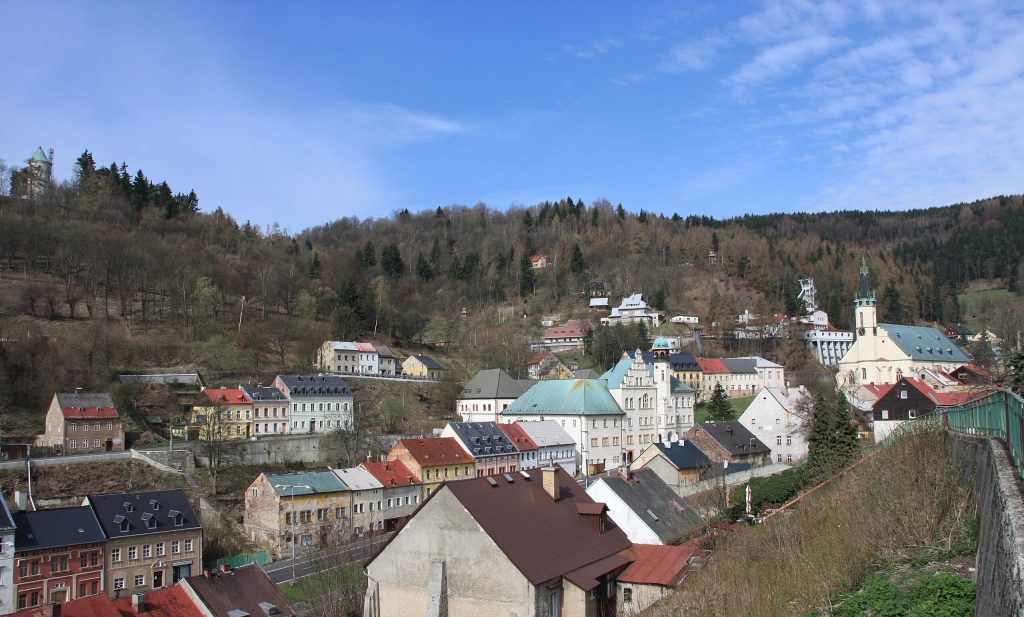
Some places hide secrets so strange they feel impossible. Jachymov, a quiet Czech town tucked inside the rugged Ore Mountains, looks simple at first glance. Yet this small corner of Europe shaped two of the strongest forces on the planet. It gave the world the name of the dollar, then later supplied the uranium that helped ignite the atomic age. Visitors stroll through its narrow streets unaware that every step crosses layers of silver dreams, broken lives and radioactive echoes.
Origins of a World-Famous Coin
In the early 1500s, miners in the valley of Joachimsthal uncovered rich silver deposits. The discovery pulled workers, traders and fortune seekers into the young settlement that would soon become Jachymov. The powerful Schlick family saw profit in the rush and began minting large silver coins called Joachimsthalers. Over time, people shortened the name to thalers. Merchants across Europe trusted these coins because the weight and silver content stayed consistent, making them a reliable choice for trade across borders.

As the thaler travelled, languages shifted the word to suit local speech. Dutch regions used daler. English speakers in early colonies picked up the word dollar when referring to foreign silver coins. This name settled into daily conversation. When the United States created its own currency in 1792, leaders chose the word people already used in everyday trade. A coin born from the silver of a small Czech valley shaped the language of money on a global scale. Today, people talk about dollars in markets and banks around the world without realising that the name began in a mining town many would struggle to pinpoint on a map.
A Town Caught Between Silver and Shadows
As years passed, the silver boom faded. Mines emptied, profits shrank and the crowds slowly left. Jachymov quietened until miners uncovered a dark, heavy ore called pitchblende. This ore contained uranium. Scientists valued it for research and industry. The presence of pitchblende marked a shift in the town’s future. The hills that once glittered with silver now held a material that would reshape science, warfare and global power.
In the twentieth century, nations raced to secure uranium as nuclear technology gained importance. Jachymov’s hills held rich deposits, and Soviet authorities took control of the mines after World War II. They forced thousands of political prisoners to work underground in harsh and dangerous conditions. Many prisoners breathed dust that tore at their lungs. Some never returned home. The tunnels became scenes of suffering as the Cold War pushed the demand for more uranium to feed weapons and reactors. These years stand among the darkest parts of the region’s history and still leave a heavy mark on the town’s memory.
Wellspring of Healing and Risk
Despite this painful past, Jachymov found an unexpected second life. Springs from the old mining areas rise through the mountains carrying natural radon gas. Over the years, people believed the water eased pain in joints and muscles.
Scientists continue to debate its effects, yet visitors still travel to the town today, seeking relief through controlled radon exposure. Local spas use the springs in therapy programs that draw patients from across Europe. It feels strange that a place once tied so deeply to radioactive tragedy now offers treatments linked to the same element. The contrast gives Jachymov an unusual mix of fear, hope and curiosity.
A Walk Through Extraordinary History
Travellers can visit the former mint building, now a museum, where replicas of the original thalers highlight how far the coins once travelled. Some historic mining houses still stand along the narrow streets, holding the shapes and styles of earlier centuries. Outside the town, a marked trail called the Jachymov Hell route guides visitors past former labour camp sites. The path honours the prisoners who suffered during the uranium years. Mountains surround the valley with soft colour that hides the weight of its past, yet each landmark hints at stories that touched nations far beyond the Czech border.
The thaler influenced trade across Europe and gave the world the most familiar currency name. The uranium beneath this valley helped shape the atomic age and shifted global power. Few places have held such extreme roles, moving from wealth and hope to fear and struggle and then to healing. The contrasts make Jachymov feel extraordinary.
Why Jachymov Matters Today
Jachymov proves that small communities can influence world events in unexpected ways. Its silver gave rise to a coin that shaped international trade. Its uranium supplied the early nuclear programs that changed the direction of science and warfare. Its springs now attract people searching for relief from pain. The town carries all these stories quietly. It does not boast about its link to the dollar, and it treats its mining past with care and reflection.
Anyone who walks through Jachymov steps across ground that once glittered with silver and later pulsed with uranium. It shaped money, altered global power and now helps people heal. The story may seem unbelievable, yet history supports every part of it. Jachymov remains a reminder that even the smallest places can leave the biggest marks.