Something stirred under the quiet grassland between two Orkney lochs, and it caught the experts off guard. When ground-penetrating radar swept across the Ness of Brodgar, a place they believed they already understood, a strange shape flashed back from beneath the earth. It did not match the grand Neolithic buildings known to the site. It did not fit the neat, rectangular style that defined the whole complex. It stood out with an eerie clarity, like a buried signal calling from a different time.
The discovery electrified the team. After 20 years of digging, documenting, and finally covering the site for protection, they thought the Ness had told its full story. Yet there it was. Something new. Something different. Something they never expected.
A Land of Ancient Stone and Still-Growing Questions
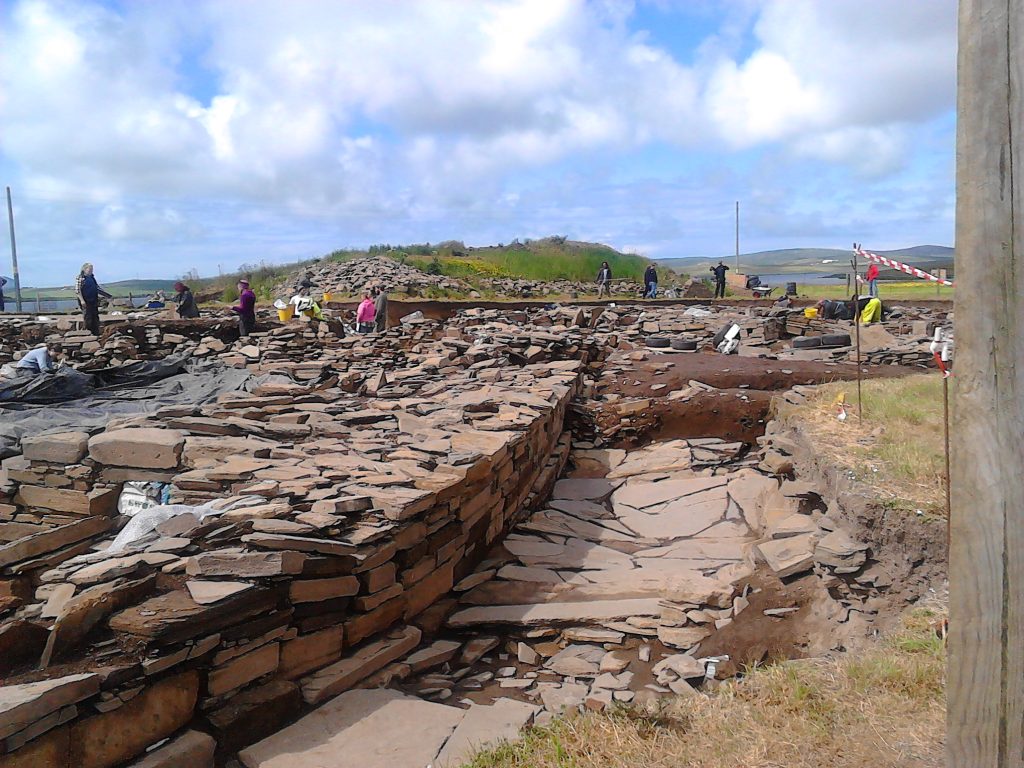
For around two decades, the Ness of Brodgar has stood as one of the most remarkable Neolithic sites in northern Europe. The complex stretches across roughly 2.5 hectares on a narrow strip of land between the Loch of Stenness and the Loch of Harray. From this small headland, visitors can see the Ring of Brodgar and the Stones of Stenness, giant monuments from the same Stone Age world.
Between 2003 and 2024, archaeologists uncovered more than forty stone buildings. Some rose with monumental stone walls. Others acted as ceremonial spaces marked by carved patterns and coloured stone. Many carried signs of human planning and artistic skill far ahead of what most expected from people living five thousand years ago.
By 2024, the team closed the trenches. They covered every structure with protective layers of soil and cloth. They believed their fieldwork was complete. That sense of completion changed quickly.
The Radar That Lit Up a New Secret
In 2025, the team returned with advanced ground-penetrating radar. This new 3D system, used for the first time in Scotland, scanned the land layer by layer and built a detailed picture of what lay beneath. Earlier geophysical work had hinted at features, but nothing with this level of clarity.
The radar produced a huge amount of data and showed the buried landscape as if peeling back soil without ever digging. Among the lines and shadows, one clear shape stood out. It did not look like the straight-edged, rectangular buildings that define the Ness. The excavation team described it as unlike anything found at the site before. They also said the feature could belong to a later period or might still be Neolithic, but they will not know until they expose it.
The idea that a well-studied landscape can still reveal something hidden filled the team with excitement. It reminded them that no matter how much the ground gives up, it can still hold surprises for those who look deeper.
A Feature That Refuses to Fit the Past
The archaeologists have kept their expectations cautious. They believe the form of the anomaly is too different from the main buildings to treat it as just another Neolithic hall. Because of this contrast, some suggest it might come from a later cultural phase. Others think it could represent a different type of structure, something uncommon or special.
They will not guess further. They know the risks of assuming too much. But they admit that the strong outline of the buried feature has captured their full attention. It might be small compared to the massive structures already uncovered, but its mystery feels larger than its size.
For the team, the discovery proves that even a site they paused after twenty years can still hold hidden wonders.
A Small Trench with Big Potential
The team will return in July 2026. This time they plan only a small, tightly placed trench above the anomaly. They expect the excavation to last a few weeks. The work will be light compared to the earlier seasons, but the goal is focused and precise.
Time Team will support the project and film a special episode. They will help compare what the radar saw with what the soil actually reveals. If the anomaly matches its ghostly radar outline, the team hopes to refine and broaden the story of Orkney’s prehistoric world.
While visitors will be allowed to view parts of the excavation, most of the older stone buildings will stay covered to protect them. Only this new feature will emerge from the ground.
Why this Discovery Matters?
The Ness of Brodgar helped reshape how researchers see the Neolithic period in Britain. Its painted stones, carved slabs, and grand halls showed a community with strong organisation and artistic vision. The site challenged the old view that Neolithic life was simple or small-scale.
Now, the newly found anomaly proves the past still has room to surprise. It shows how new technology can expose details the human eye misses. It proves that even the most carefully studied places can hide more than expected.
Whatever emerges in 2026 will not only deepen the mystery of the Ness. It will remind everyone that ancient landscapes still hold unseen stories waiting for the right moment to rise again.