If you walked past a tiny noodle shop in Hong Kong and heard rhythmic thuds echoing from the back room, you might think someone was performing a strange dance. In fact, you’d be witnessing one of the city’s most extraordinary food traditions: the art of making bamboo pole noodles. With a long strip of dough beneath a giant bamboo stick, a noodle master bounces up and down like a seesaw, using his whole body weight to press the dough into silky perfection. This centuries-old craft is now on the brink of disappearing, kept alive by only a handful of artisans who refuse to let the tradition die.
The Seesaw Secret
The method dates back hundreds of years and looks more like performance art than cooking. The noodle maker sits on one end of a thick bamboo pole, while the dough rests underneath the other. By bouncing rhythmically, the bamboo flattens and strengthens the dough, giving it an elastic bite no machine can copy.
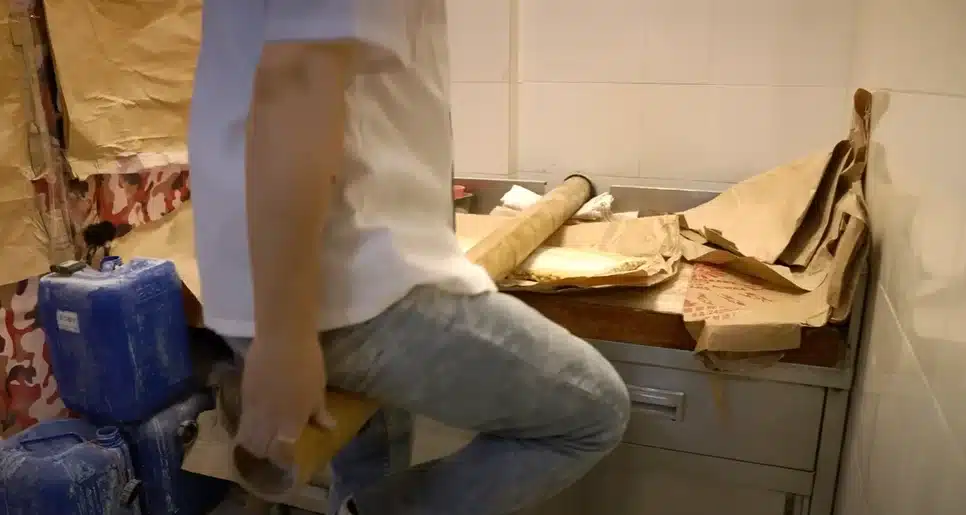
The result is noodles with a springy texture that Hong Kong diners prize above all else. It takes years of training and countless hours of repetition before a master develops the balance and timing needed to perfect this technique.
A Tradition Under Threat
While the flavour and texture of bamboo noodles are unmatched, the number of practitioners has dwindled. As of the last decade, only a few shops still used the bamboo pole method, including Lau Sum Kee in Sham Shui Po.
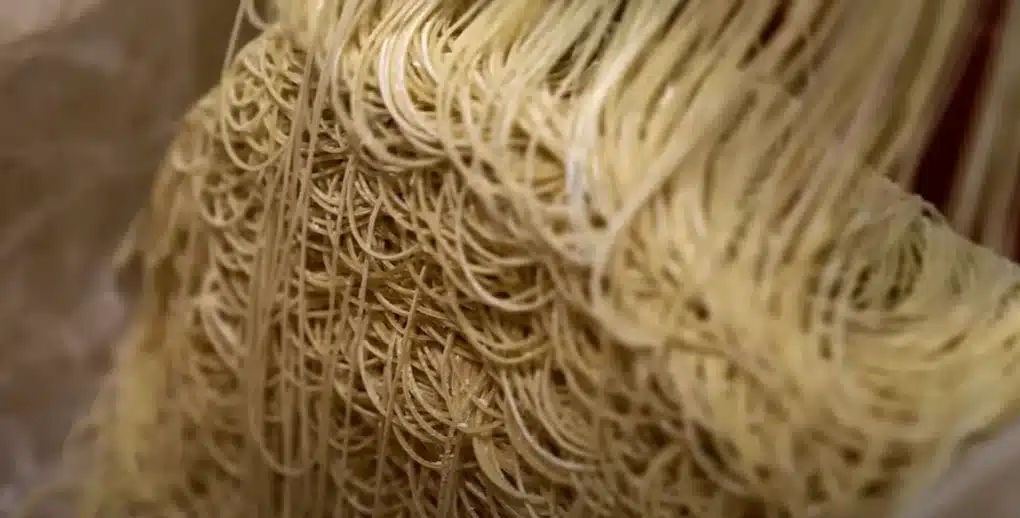
Younger generations often avoid the trade because it demands long hours of physical labour, all while competing with faster, machine-made production. What was once a common sight across Hong Kong is now rare, making every bowl from these shops a taste of living history.
More Than Noodles, A Performance
Watching a bamboo noodle maker at work is as memorable as tasting the final dish. The rhythmic creaking of the pole, the bounce of the master’s body, and the slap of the dough create a scene that draws curious onlookers.
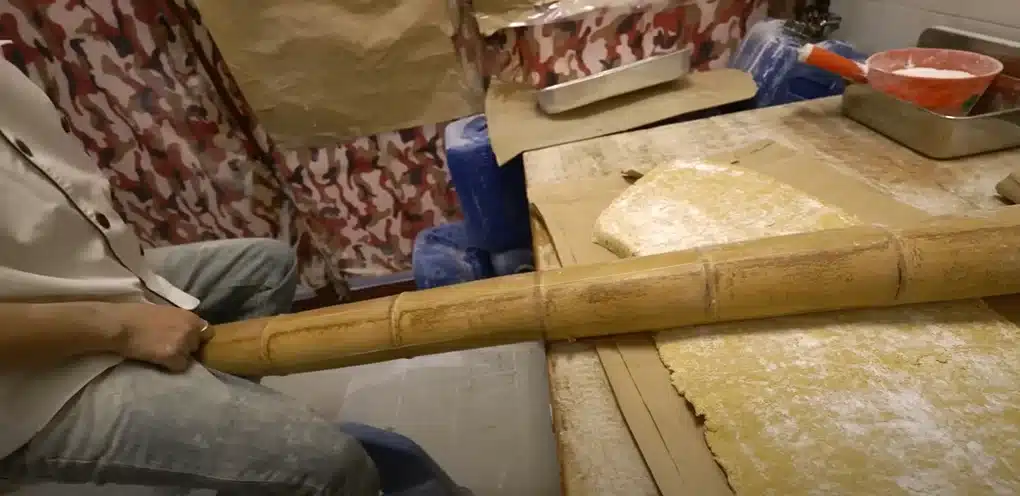
Locals speak of the process with reverence, knowing the noodles’ chewy texture carries the weight of centuries of tradition. Tourists who stumble upon these shops often describe it as stumbling into a live museum exhibit, except the art ends in a steaming bowl of wonton noodles.
Preserving an Edible Legacy

Food historians warn that if these artisans retire without apprentices, the bamboo pole noodle may vanish altogether. Efforts are being made to promote the craft through documentaries, food tours, and cultural heritage listings, but ultimately its survival depends on whether new generations see value in continuing it.
For now, if you sit in one of these shops, you’re not just eating noodles. You’re tasting the stubborn resilience of Hong Kong’s culinary identity, pressed into every springy strand by a man bouncing on a pole.