Imagine standing at the edge of a crack in the world so deep and wide it could swallow a city whole. The ground drops away in dizzying cliffs, revealing a chasm carved over hundreds of millions of years. The Fish River Canyon in Namibia is not just big. It is colossal. Locals say the air itself feels different here, as if the canyon has its own pulse, its own breath. One wrong step and you are staring at a 550-metre plunge into the belly of Africa’s largest canyon. It is a place that commands silence, yet shouts its presence with every jagged edge and shimmering rock face.
An Ancient Scar in the Earth
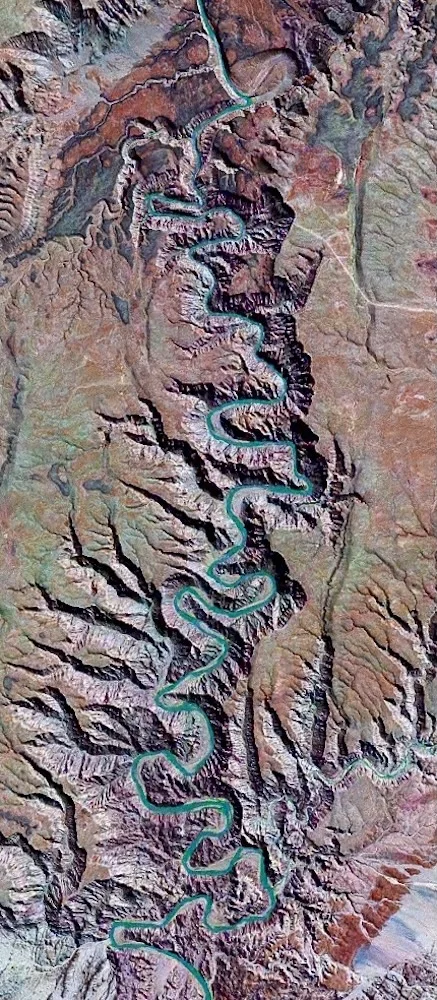
Long before humans walked this land, the Earth’s crust split open. Around 650 million years ago, tectonic forces dropped a section of the planet’s surface, creating a deep trench. Over time, ice, wind and water gnawed at the exposed rock. The Fish River slowly carved its way through this ancient fracture, slicing it into the staggering 160-kilometre-long canyon seen today. The exposed layers tell a story of deep time, each stratum a frozen record of a world that once was. Some sections date back nearly two billion years, older than most life on the planet.
A View That Stops You Cold
From the main Hobas Viewpoint, the scale hits like a physical force. The canyon yawns 27 kilometres across at its widest, and the river glints far below like a silver thread. At sunrise, the light spills into the canyon, painting the walls in molten gold, while shadows crawl across the depths. At sunset, the stone turns crimson, as if the Earth itself is glowing from within. Many travellers linger here, not to take photos, but because it takes a long moment for the mind to believe what the eyes are seeing.
The Trail That Tests the Brave
For some, standing at the rim is not enough. The Fish River Canyon Trail is one of the most demanding hikes in Africa. Spanning up to 90 kilometres, the route follows the winding river through boulder-strewn gorges, sandy stretches and steep ascents. There are no facilities along the way, and hikers carry their own gear. The trail is only open in the dry season from May to September when the river’s flow slows to a trickle. Those who take it on speak of aching muscles, blistered feet and an unshakable sense of awe. Nights bring a ceiling of stars so dense it feels like the sky is leaning closer.
Life in a Harsh Land
The canyon’s arid cliffs seem barren at first glance, but life clings to them in surprising forms. Quiver trees rise like silent sentinels, their branches adapted to store water. Rare succulents, including the strange halfmens plant, survive in the rocky soil. Baboons patrol the ledges, while mountain zebras and kudu pick their way across the slopes. Overhead, black eagles and fish eagles ride the thermals, their calls echoing off the stone. Each species has found a way to live in this fierce environment, proof of nature’s stubborn will.
Fire and Water at Ai-Ais
At the canyon’s southern end lies Ai-Ais, where steaming hot springs bubble from the ground. The Nama people named it Ai-Ais, meaning “burning water”, a nod to the scalding temperatures of the mineral-rich pools. Today, hikers emerge from the dust and strain of the canyon trail to soak in these natural baths. The hot water soothes tired muscles, and the surrounding mountains turn pink as the day ends. It is a rare comfort in a place built on extremes.
Why It Leaves People Speechless
The Fish River Canyon is not just a spectacle of size. It is a place that makes people feel the scale of the planet itself. Standing at its rim is a reminder that the Earth has been moving, shaping and changing long before human history began. For all its beauty, it is raw and uncompromising. The cliffs do not care if you are afraid of heights. The heat will not ease because you are tired. Yet those who face it often leave feeling changed, as if they have stood in the presence of something ancient and untouchable.