A motion sensor flickers in a quiet forest in the Czech Republic. Hidden among grass and trees, a camera trap waits patiently beside a narrow animal path. Days pass with nothing but wind and rustling leaves. Then one night the sensor triggers. The photograph that appears later reveals a creature many believed had vanished from the region. The image shows the European wildcat, an elusive predator often called Europe’s “ghost cat.”
Rare photographs and video footage now show that this secretive feline still moves through parts of Europe’s forests.
The Phantom Of Europe’s Woodlands
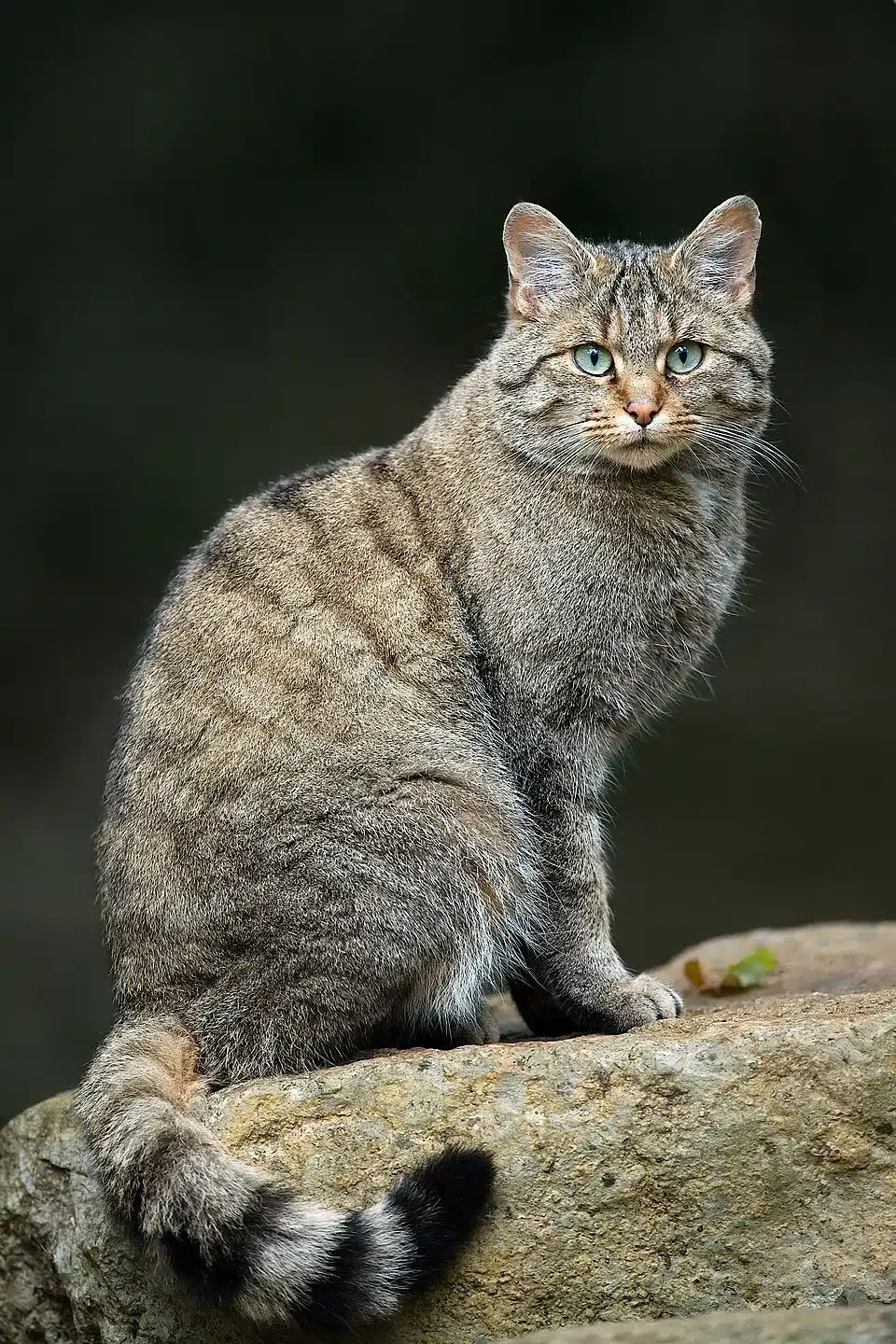
The European wildcat, Felis silvestris, lives across forests and wild landscapes throughout parts of Europe and western Asia. The animal resembles a sturdy domestic tabby but carries thicker fur, a broader face and a distinctive bushy tail with dark rings and a black tip. Adult males can reach about 65 centimetres in body length and weigh up to 7.5 kilograms.
The species prefers mixed and broad-leaf forests where dense vegetation allows it to remain hidden from people. Wildcats avoid heavily farmed land and human settlements. Their behaviour also helps them stay unseen. In many areas they are mostly active at night, although they may move during daylight when human disturbance remains low.
These cats hunt small mammals such as rodents and rabbits, and they sometimes take birds. Their solitary and cautious nature makes them extremely difficult to observe in the wild.
Scientists estimate that about 140,000 European wildcats live across more than two dozen countries in Europe. Yet researchers still struggle to calculate precise numbers because the animals rarely appear in direct sightings.
When Europe Lost Its Wildcats
Centuries ago the European wildcat occupied a vast range stretching from the British Isles across continental Europe and into parts of Turkey and the Caucasus. Over time that range shrank dramatically.
Habitat destruction, human expansion and hybridisation with domestic cats caused populations to decline from the late eighteenth century through much of the twentieth century. In several regions the species disappeared entirely.
The Czech Republic was among the countries where the animal was believed to have vanished. By the twentieth century, the wildcat no longer appeared in wildlife records across the country.
That assumption began to change in 2011. A camera trap placed in Šumava National Park captured photographs confirming the species’ presence in the Czech Republic for the first time in more than sixty years.
Researchers later documented more than 600 reliable records of wildcats between 2010 and 2021 across several regions of the country. These findings confirmed that the species had either survived undetected or returned from neighbouring populations.
Eyes In The Forest
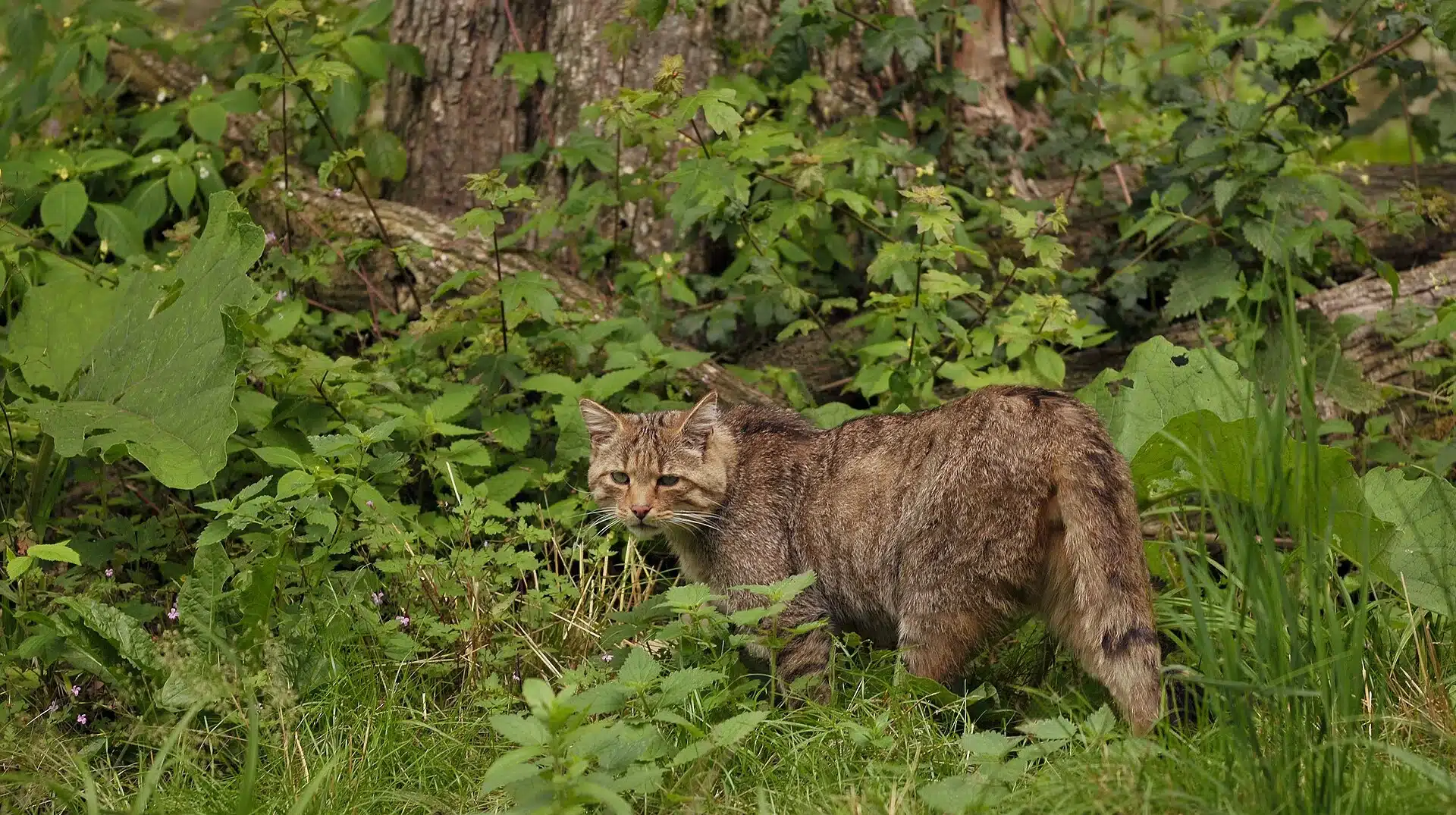
Modern technology now plays an important role in revealing the hidden life of the wildcat. Camera traps allow scientists and photographers to observe wildlife without disturbing natural behaviour.
Wildlife photographer Vladimír Čech Jr installed a specialised camera trap in suspected wildcat territory in the Czech Republic. The device combined a camera, remote control and motion sensor that triggered images automatically when animals passed.
The system produced some of the highest quality photographs ever captured of the species.
Elsewhere in Europe, biologist Andrea De Giovanni placed another camera trap in Chiapporato, an abandoned village in the Apennine Mountains of Italy. The researcher originally hoped to record wolves or deer. Instead, the camera captured clear footage of a wildcat moving through the landscape.
Such non-intrusive monitoring allows scientists to document wildlife behaviour without human presence. The technology provides vital evidence of species that remain extremely difficult to observe directly.

Signs Of A Quiet Recovery
Recent discoveries suggest the European wildcat may be slowly recovering in parts of Central Europe.
Researchers in the Czech Republic recently documented wildcats reproducing in the Lusatian Mountains along the German border. Observations included a male wildcat seen with a female and three kittens. The birth of kittens represents a major milestone in the species’ return to the region.
Just fifteen years earlier the wildcat was believed to be extinct in that part of Central Europe.
Wildcats have also appeared in other areas where they were once thought lost. Camera traps have confirmed the species’ presence in Austria, while populations remain established in countries including Belgium, France, Germany and Slovakia.
Conservation efforts across Europe aim to protect the animal’s forest habitat and reconnect fragmented woodland areas. In Germany, conservation groups created ecological corridors linking forests so wildcats can move safely between habitats.
In Scotland, conservation programmes released captive-bred wildcats into the Cairngorms in 2023. Some of these animals later produced kittens in the wild during 2024.
The Ghost Still Walks
Despite these signs of recovery, the species continues to face challenges. Habitat loss and interbreeding with domestic cats threaten the genetic purity of wild populations in some regions.
Yet the growing number of camera trap images tells an encouraging story.
In forests where the wildcat once seemed lost, researchers now detect its presence again through photographs, video footage and genetic evidence. Each discovery adds another piece to the picture of a species that never fully disappeared.
The European wildcat remains one of the most elusive predators in the continent’s forests. Most people will never see one in the wild. Still, somewhere among the trees, the ghost cat continues to move silently through the woodland.
Photo Credit: Wikipedia
Published 28-March-2026