A dark shape dropped from the canopy as headlights swept across a quiet road outside Vancouver in 2023. The bird glided low, silent as falling ash, before rising back toward a line of towering cedars. Its wide wings caught the glow for only a heartbeat, but the rounded head and dark eyes gave it away. It was a barred owl, one of 170 brought to a Vancouver wildlife centre that year after collisions with vehicles, yet still part of a population that kept growing, spreading and settling into new places as if the continent itself had opened the door.
The Rise of an Unexpected Visitor
Barred owls never used to live in the Pacific Northwest. For most of their long history, they stayed in the eastern half of North America. Fossils found in Florida, Ontario and a Tennessee cave show they lived there thousands of years ago. Their westward shift began when humans reshaped the land. Fire-managed prairies turned into a patchwork of farms, towns and new stands of trees. Tree cover expanded across areas once kept open by regular fires. With each change, a new route appeared.
By the early 1900s, barred owls had reached Manitoba. In 1943, they appeared in British Columbia. Vancouver Island recorded its first barred owl on 26 November 1969. They reached western Oregon by 1974, northern California by 1981 and Seattle’s Discovery Park by 1982. Today they occupy much of the West, settling into forests, suburbs and even city parks with ease.
Built for the New Wild
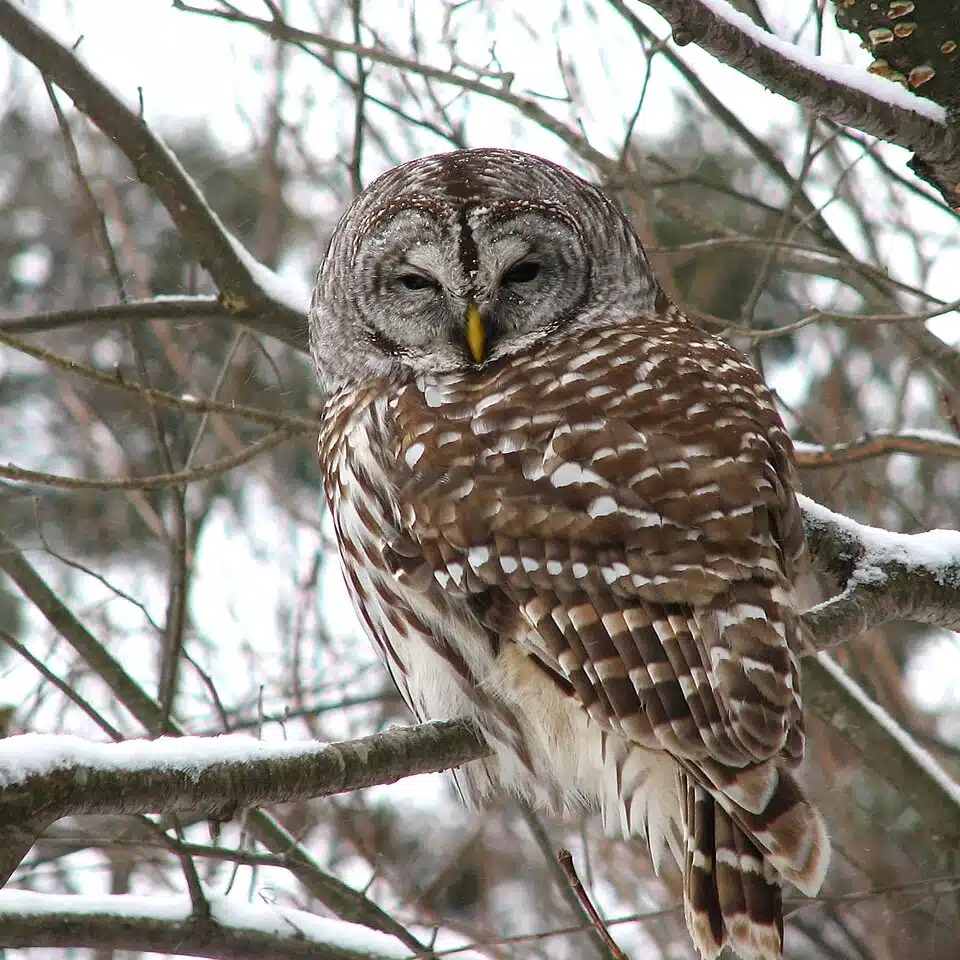
The barred owl carries every advantage it needs. It stands about half a metre tall, its feathers striped in warm brown and white. Its large brown eyes excel in low light. Its ears sit at slightly different heights, helping it pinpoint sound with striking accuracy. Unlike many birds, it grows new sound-sensitive cells inside its ears throughout its life, keeping its hearing sharp into old age.
These owls thrive in big trees with roomy cavities, and western forests offer plenty of them. They adapt well to human spaces too. In many cities, old oaks, poplars and maples grow tall and hollow, creating spaces ideal for nesting. Moist air helps these trees grow quickly. Suburban green belts echo the mixed woods of the east. For a barred owl pair, the match feels close enough.
A Menu With No Limits
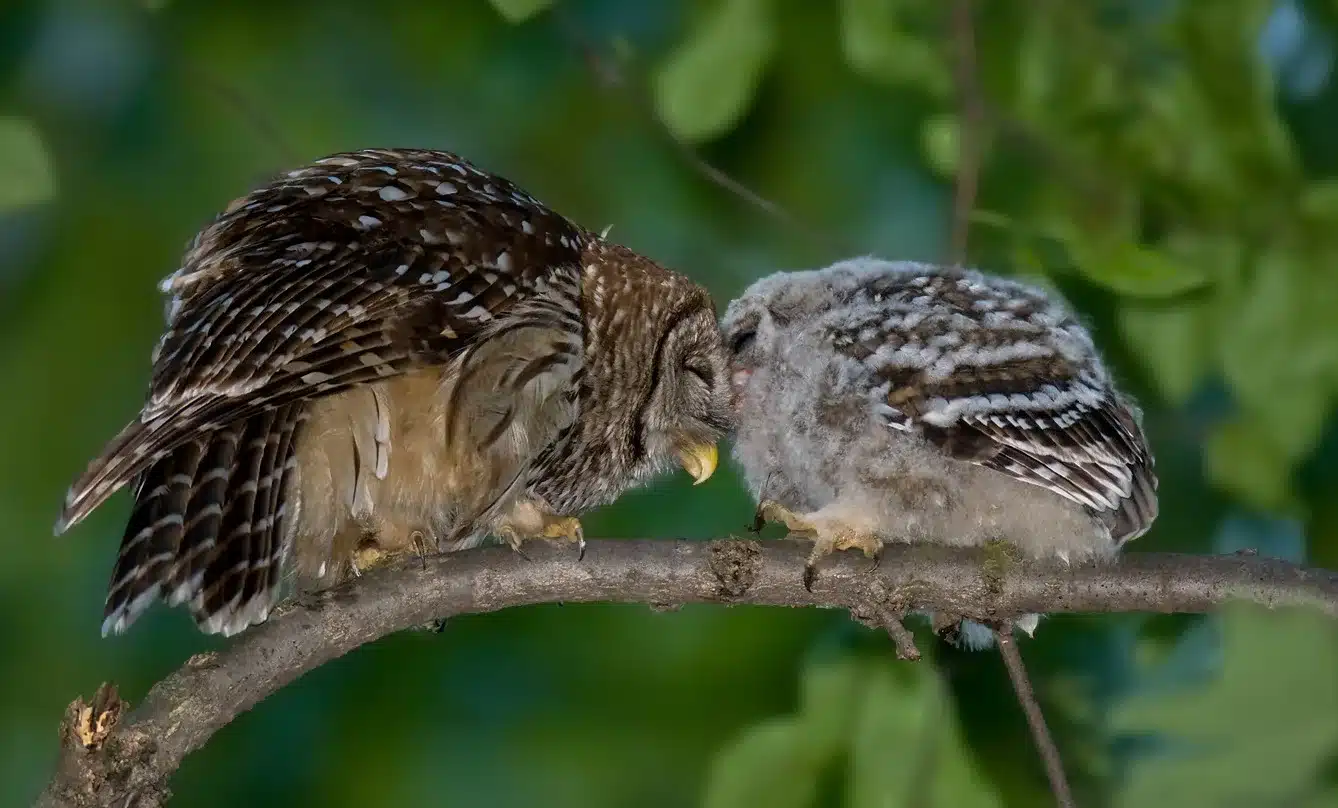
Barred owls eat almost anything they can grab. Squirrels, mice, voles and rats make up much of their diet. In parts of British Columbia, young rats are a major food source. They take frogs, snakes, beetles and crayfish. They pull fish from ponds and store prey in tree hollows or between branches. In winter, they stamp on hedges to flush hidden songbirds into the air.
Their preferences shift by location. In Charlotte, North Carolina, more than half of their known prey items were birds. Around Vancouver, small mammals dominate. In forested regions, they add beetles and frogs to the mix. They hunt by watching from a high perch, then dropping swiftly and silently onto their target.
Trouble for the Neighbours
Their expansion has placed other owls under pressure. Northern spotted owls, once common in the old-growth forests of the Pacific Northwest, are struggling. They rely on ancient, shaded forests and nest in the large cavities of massive trees. They hunt mostly arboreal mammals and avoid crossing open spaces.
Barred owls moved into those same forests and quickly outnumbered them. They compete for nest sites. They push spotted owls from hunting grounds. They eat many of the same prey. They sometimes kill them. A small number of hybrids have even appeared. Between 2005 and 2017, spotted owl numbers in the United States fell by as much as 85 percent. In British Columbia, only one wild spotted owl was confirmed in 2023.
On Vancouver Island, the western screech owl faces similar danger. Once common, it became uncommon by 2005. Some individuals may now call less often to avoid drawing attention from barred owls, making them even harder to detect.
The Human Dilemma
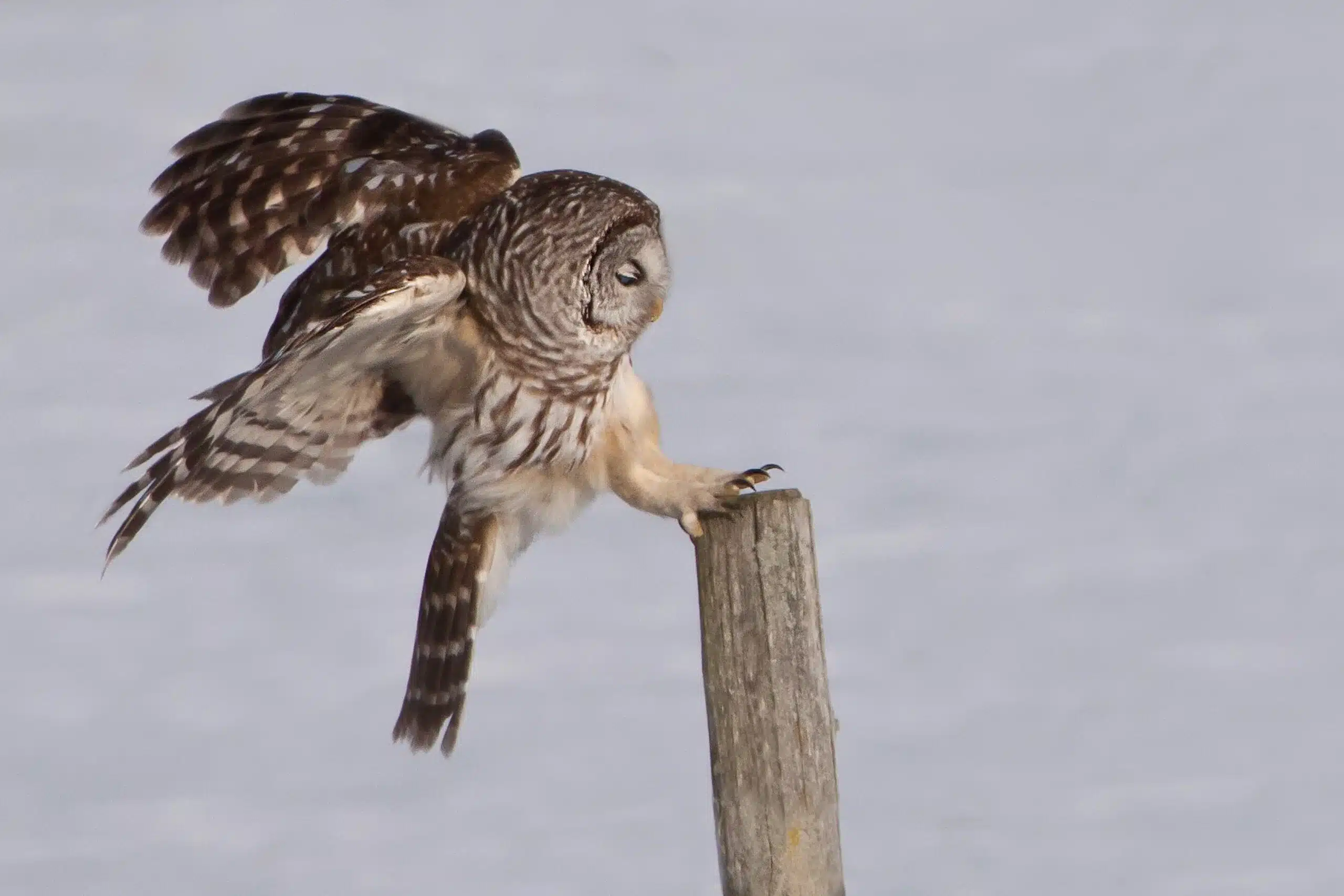
Despite facing predators like great horned owls and goshawks, barred owls continue to rise in number. Some regions have tried to help native owls through controlled removals. Between 2013 and 2021, trained personnel in the United States removed 3,000 barred owls to slow spotted owl decline. In November 2023, a large-scale proposal suggested reducing barred owl numbers across Northern California, Oregon and Washington over a 30-year period. Since 2007, British Columbia has also relocated or euthanised barred owls as part of recovery efforts for the spotted owl.
Experts question whether these measures can reverse spotted owl losses. Restoring old-growth forests would take far longer than a single owl lifetime. Barred owls breed more quickly, adapt more easily and settle into any available habitat.
The Wonder and the Warning
Even with the challenges they bring, barred owls continue to captivate the people who live alongside them. They appear on streetlights in downtown Victoria. They perch on backyard fences. They watch groups walking their dogs at night. Many residents wait for their rhythmic calls to echo through the trees.
Barred owls did not set out to conquer new territory. They moved into landscapes humans shaped in ways that suited them. Their rise poses a difficult question about how nature changes when human decisions reshape the land.
In the forests and cities of the West, the barred owl continues to call into the night, a reminder that wild creatures seize every opportunity the world lays before them.
Published 26-January-2026